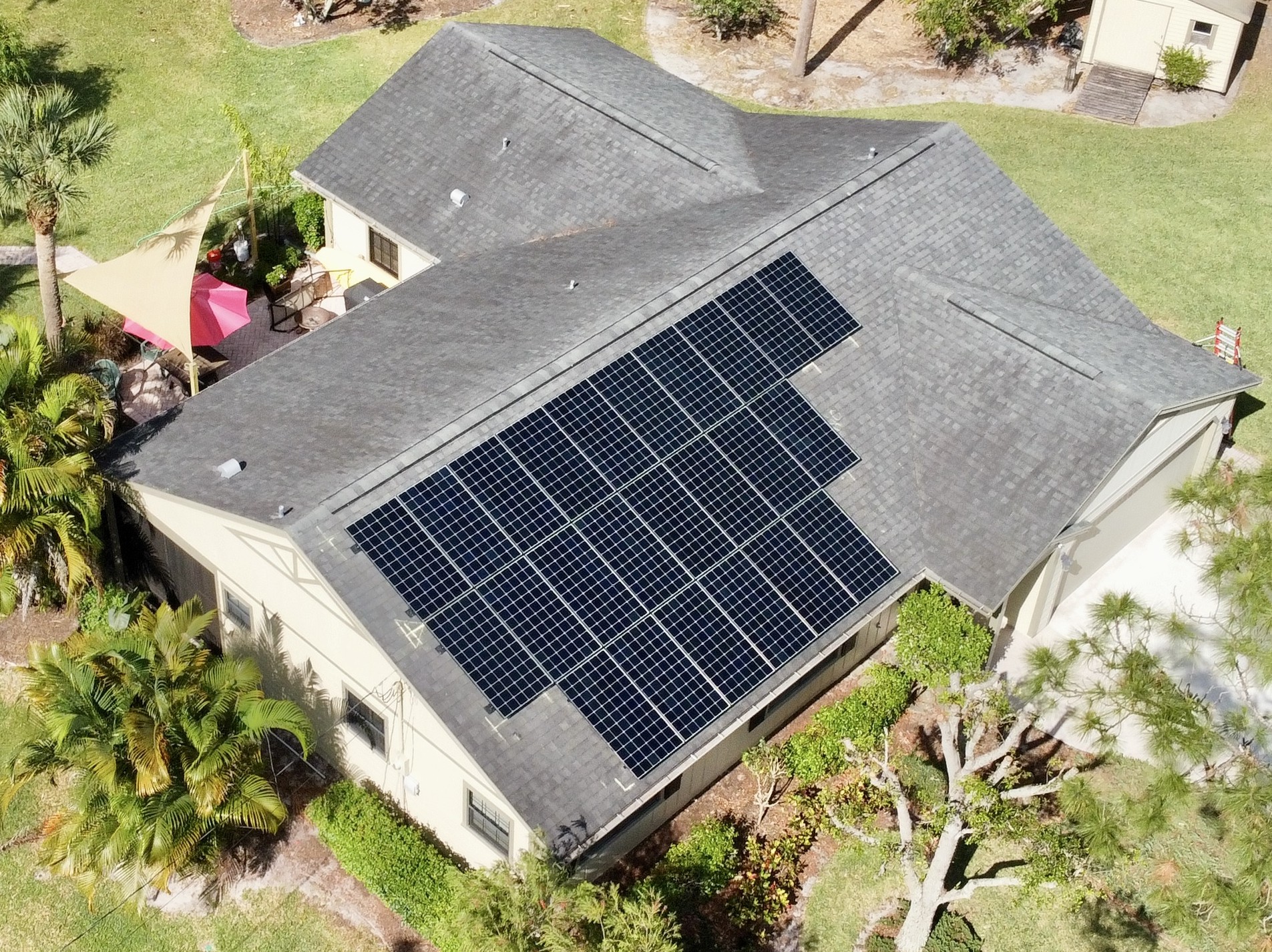
Key Takeaways
- A residential solar system comes with several different warranties — product, performance, power electronics, and workmanship — and they do not behave the same way.
- Solar panel warranties may be less protective than they appear; exclusions create significant gray areas.
- PV module warranty claims are harder than inverter or optimizer claims.
- Returning a failed panel can cost more than the panel itself, around $250 in freight at the time of writing.
- A warranty "replacement" may actually mean a partial refund, not a replacement panel.
- The refund may not reflect what you originally paid.
- Module obsolescence makes a panel failure a system-design problem, not merely a warranty problem.
- Keeping spare modules from installation day is one of the smartest, least-used strategies in residential solar.
The Truth and the Reality of Solar Panels Warranty
The solar industry has evolved exponentially over the past ten years. Inverters weigh less and last longer. Solar panels are more efficient and pack more watts per square foot than ever before. But there is one thing that has not evolved at the same pace, and it is the warranty on the equipment.
A 25-year warranty sounds reassuring on a proposal. From my experience inspecting residential PV systems across the U.S., I can tell you that the paper protecting your panels — and what actually happens when one fails — are two very different things.
In this article, I will walk you through what solar panel warranties really cover, where the gray areas hide, what a claim actually costs, and what you can do before a panel fails so a single bad module does not turn into an expensive problem.
What a Solar Panel Warranty Actually Covers
Before we get to the fine print, you need to know that there is no single "solar warranty." A typical residential system carries four different ones, and homeowners mix them up all the time:
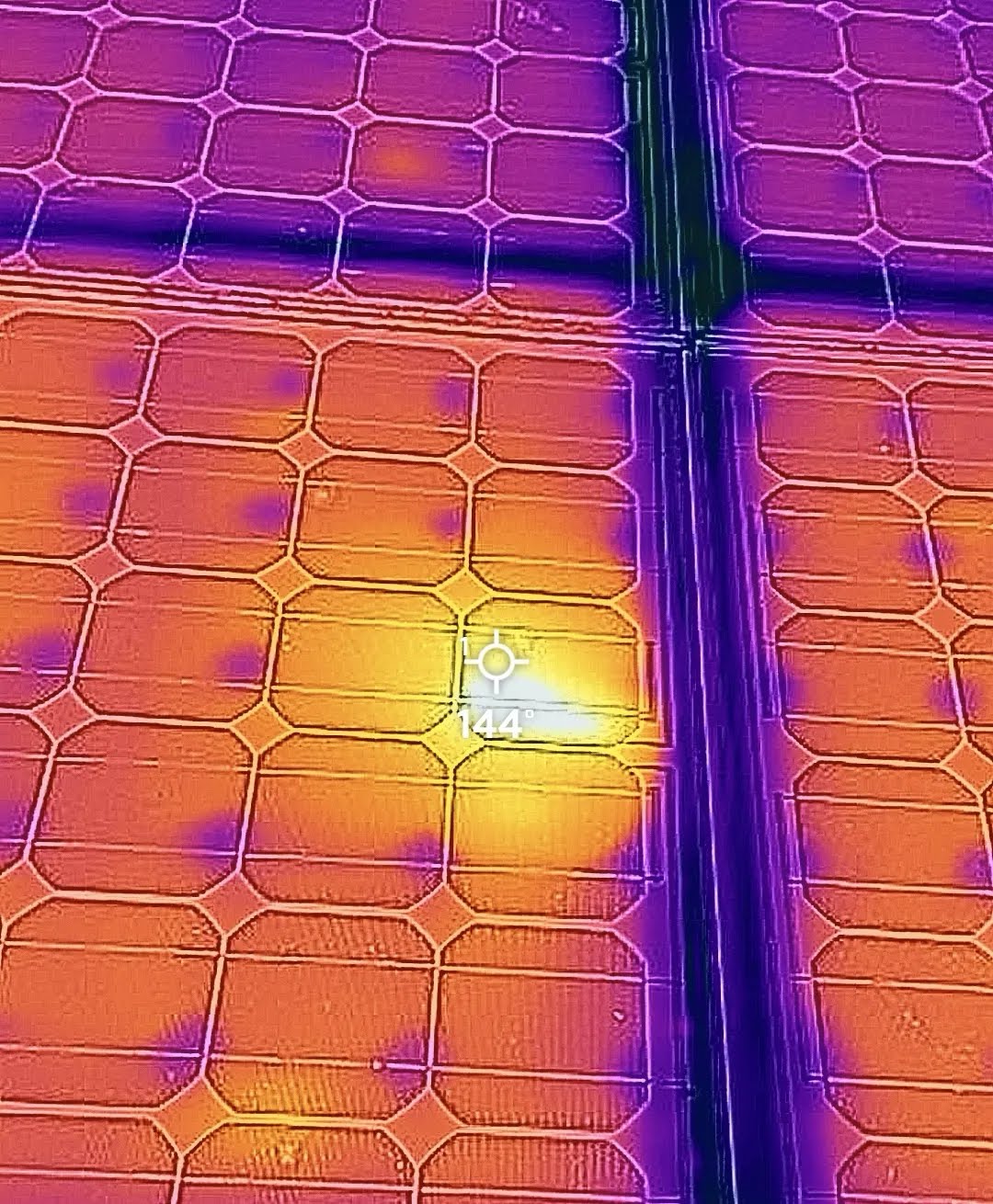
- Product warranty (typically 10–25 years). Covers defects in the PV module itself, materials, and manufacturing. This is the one you invoke when a panel cracks, delaminates, develops hot spots, or its junction box fails.
- Performance warranty (typically 25 years, sometimes 30 for bifacial modules). Guarantees the panel still produces at least a stated percentage of its nameplate output over time. For example, no more than ~2% degradation in year one and roughly 0.4–0.55% per year after that, ending around 80–87% of original output at year 25.
- Power electronics warranty (typically 10–25 years). Covers the inverter, optimizers, and rapid shutdown devices.
- Workmanship warranty (typically 1 to 2 years, issued by your installer). Covers installation defects such as roof leaks, loose racking, and wiring mistakes. This one is only as strong as the company that issued it, and I will come back to why that matters.
Keep the distinction in mind: a product claim is about a panel that physically failed; a performance claim is about a panel that is producing less than promised. They follow different processes, and they place different burdens of proof on you. That is where most owners get surprised.
Power Electronics: The Easy Claim
Let's start with the good news. For power electronics — inverters, module-level optimizers, rapid shutdown devices, and similar components — the warranty process is usually straightforward. The part goes bad, you or your installer follow an RMA (Return Merchandise Authorization) process, and you get a replacement part.
It is rarely free, though. The process usually involves two truck rolls, one to diagnose and remove and another to reinstall and verify, and that labor cost falls on the system owner. Many OEMs cover a labor allowance that eases part of the service cost, but do not count on it covering everything.
Painful? A little. Predictable? Yes.
Now let's talk about solar panels, the PV modules themselves, because this is where the gray area begins.
PV Modules: Where the Gray Area Begins
I have processed and witnessed warranty situations with several of the best-known manufacturers in the solar industry, and I am not even counting the ones that have gone out of business, despite the fact that their products were advertised as "Tier 1." A quick reality check: Tier 1 is a bankability list, not a quality or longevity certification. Yes, I know. Marketing did it again.
Here is what the warranty language actually looks like when things go wrong.
The "Act of God" exclusions
One clause you will find in nearly every module warranty is the Act of God exclusion. Manufacturers tend to share the same limited-warranty language, something like:
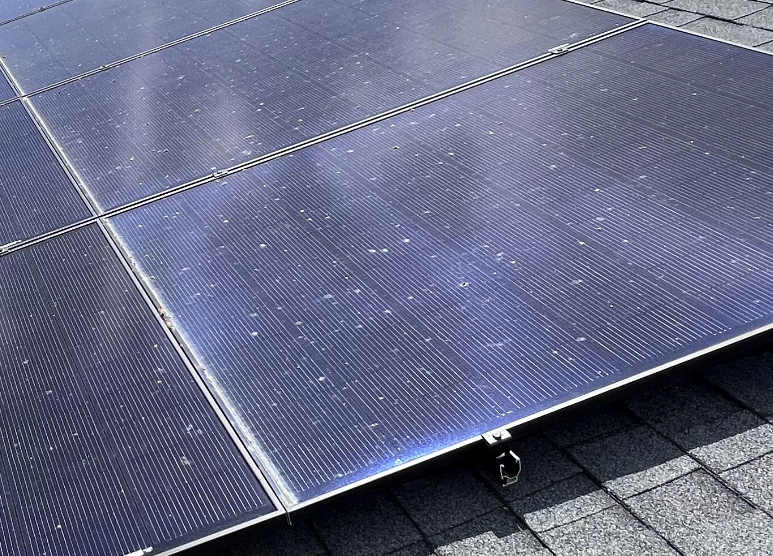
"...This warranty is not available for acts of God/nature such as (but not limited to) lightning, hail, frost, snow, storms, tidal waves, floods, extreme temperatures, saline air, volcanic eruptions, landslides, wind speed, nuclear events, etc."
Read that list again, and then look at the product brochure. Panels are advertised as resistant to high wind and heavy snow. Some are certified to IEC 61701 (salt-mist corrosion testing for marine environments) and IEC 62716 (ammonia exposure). So if the product "has passed exhaustive testing" for salt air, why does the warranty exclude saline air?
The answer is burden of proof. To win a claim, you must demonstrate that the panel failed because of a manufacturing defect, not because of a weather event. And how much do you think it costs a solar panel owner to prove that? Thermal imaging, EL (electroluminescence) testing, and possibly an engineering report.
Anyways, I am not going to discuss their lawyers' intentions behind those clauses. Just understand what the clause does: it moves risk from the manufacturer to you.
One practical note: hail, wind, and storm damage are often insurable events under your homeowner's policy even when they are excluded from the warranty. Before you assume you are stuck, check both documents. They cover different risks, and neither one covers everything.
The return policy: when shipping costs more than the panel
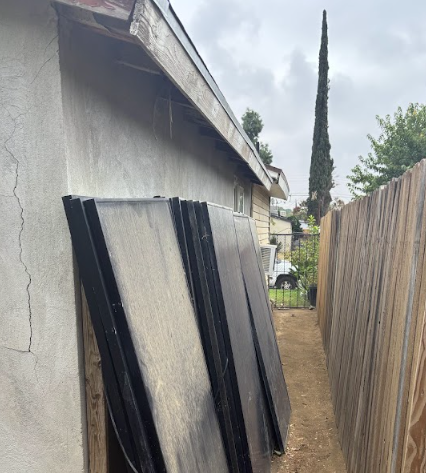
Now let's jump into the return policy and when it applies. In most module warranties, the cost associated with returning the damaged product is borne by the customer. We are talking about a freight shipping cost of approximately $250 per module (as of the time of writing, verify current rates before you file).
As you have probably just inferred, the shipping can cost more than the panel itself. That does not make any sense economically, but in most cases, the manufacturer can void the warranty if the failed product is not returned to them. Luckily there are manufacturers that do not require returning the damaged panel, but still the owner needs to dispose of them properly.
So, what does the customer actually get?
Obsolescence: when replacement means partial refund
A little background on the solar industry: panels evolve so fast that a PV module manufactured today might be obsolete next year. Once a model is discontinued, the manufacturer no longer fabricates it, so they cannot send you one. Instead of a replacement panel, you get a refund, typically calculated at:
- The current per-watt market price, or
- what the product originally cost at the distribution level on the date of purchase—which is not the same as what it cost you.
To make it clearer: suppose a panel costs $130 from the factory to the distribution company. By the time it reaches your roof, after the distributor's markup and the installer's markup, you may have paid close to double that as part of your installed system.
This chain of markups can reach 100% over the original cost. On a warranty claim years later, if you are lucky, you get the $130; not what the panel cost you, and not what a repair will cost you now.
And now you face the real problem. You have some refund money, a hole in your array, and a rooftop system that was designed around a specific module that no longer exists. Any replacement has to match wind and snow loads, physical dimensions, electrical characteristics, and the existing racking. Becoming an engineering problem and not a warranty process anymore.
How to Prepare Before a Panel Fails
There are ways to mitigate all of this, and they start before anything fails. Here is what I recommend, based on years of inspecting and troubleshooting residential systems.
Tip 1: Buy spare modules at installation.
If you have not installed your system yet, make sure to obtain some spare modules of the exact model being installed.
One caveat: PV modules degrade, so by the time one fails, the mismatch between your aged array and a brand-new spare may be greater than 5%. Two ways to handle that:
- In-string replacement. If the spare has the same power rating (W) as the failed module, you can swap it in directly depending on how much the old string has degraded.
- Full-string replacement. If the mismatch exceeds the ~5% rule of thumb we use in the field, replace the entire string with new modules and keep the removed, still-good panels as your new spares. They already match the degradation of the rest of the array, as long as they are all from the same series.
Now, you may wonder, how many spares should I get? The common practice value is 2% of the total number of modules. For a 30-panel system, that is 1 panel. Is one enough?
My experience in the field has taught me that, for small residential systems, it is not. But I also do not want to give up garage space for a failure that will probably happen 3 to 10 years from now.
So here is the table I actually use as a reference for residential systems:
The spares do not have to be the same wattage but the same model family. For example, a hypothetical XSX-350W module can be replaced by the same model at a different power bin, XSX-340W, as long as the power difference does not exceed 5%, including degradation over the system's lifespan.
Tip 2: When you cannot match the panel, match the string
This second option applies when you cannot find the same PV module or cannot meet the requirements from Tip 1. Find a module with the same physical dimensions and wind/snow ratings (if applicable), and replace a complete string.
The idea is to minimize the impact on the structural and electrical integrity of the existing system. It still requires an electrical and mechanical evaluation, but believe me, this solution is more frequent nowadays than you think.
Tip 3: Retrofit optimizers as a last resort
There are third-party, module-level components that can be retrofitted to an existing system to reduce the mismatch effect between old panels and new ones. These are called optimizers, and they are not specific to one brand.
Tigo offers their long-standing TS4-O product, which can be installed independently of whatever is already on the roof and does not require Tigo monitoring to operate.
I am not advertising the product, just providing you with the knowledge that solutions exist.
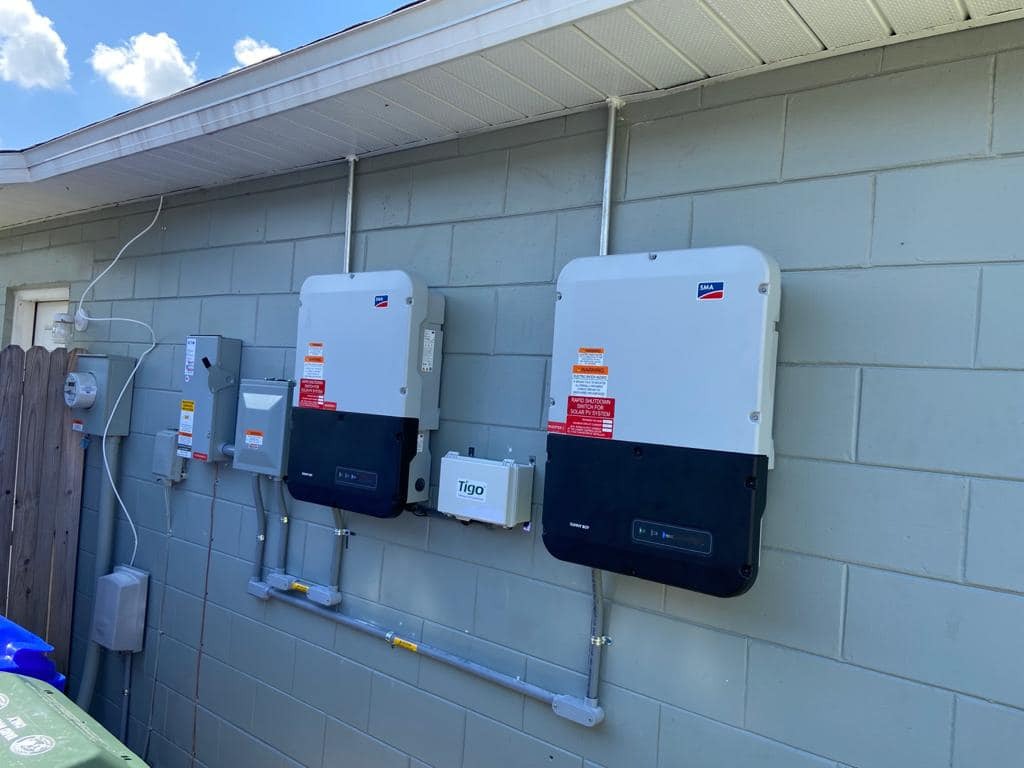
SolarEdge also provides an optimizer-based solution, but it might be costly, as it requires the use of their proprietary equipment, such as the inverter.
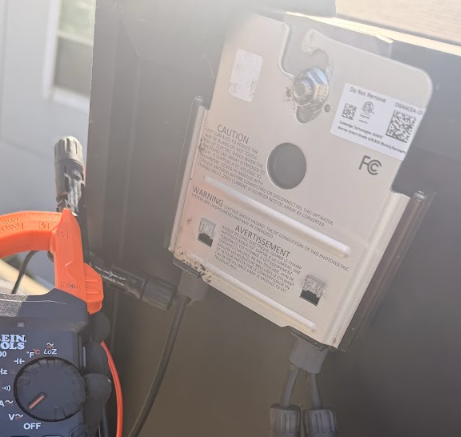
The use of optimizers is considered the last resort, for when Tip 1 could not be met. Believe me, it happens most of the time.
Finally, if you already have a microinverter system, that works in your favor: the same principle applies; module-level power electronics naturally mitigate mismatch between existing and new PV panels.
A Warranty Due-Diligence Checklist (Before You Sign or Before You Buy the House)
Most warranty pain is avoidable with 30 minutes of reading before the contract. If you are planning an installation or buying a home that already has one, work through this:
- Ask for the actual warranty documents, not the brochure. Read the exclusions section first.
- Separate product from performance coverage, and note the length and the degradation schedule of each.
- Check the manufacturer's U.S. presence and RMA process. A warranty is only as real as the entity that honors it. "Tier 1" branding does not guarantee that.
- Verify transferability if resale matters to you: remaining term, registration requirements, and whether the warranty follows the system or the original owner.
- Understand your installer's workmanship warranty and their financial health. If the installer goes out of business, that warranty usually goes with them. Equipment warranties survive; workmanship warranties often do not.
- Ask about spare module availability at install time (see Tip 1).
- Document commissioning. A baseline performance test and thermal or EL imaging, where practical, gives you evidence if you ever file a performance claim.
- Budget for claim costs: freight, two truck rolls of labor, and possible testing.
Buying a home with solar panels? Treat the system as a warranty position, not just an asset. Before you sign, verify who issued each warranty, how much term remains, whether it transfers, and whether the installation itself was done to code. Improper installation can void equipment coverage.
An independent pre-purchase solar inspection catches exactly this class of problem and gives you a written summary your real estate agent or lender can use.
How an Independent Inspection Protects Your Warranty Position
When a claim goes sideways, evidence wins. As an NABCEP-certified PV inspector, the work I do — thermal imaging to find hot spots, performance and output testing, code-compliance verification, and a written report — is the same evidence package that manufacturers, insurers, and real estate transactions respond to.
One of the hardest lessons in this industry: a hot spot found on a seven-year-old panel is a warranty claim only if the manufacturer still exists to honor it. When they don't, documentation is what lets you pivot to insurance, to a repair strategy, or to an informed negotiation instead of a dead end.
Bakertech does not sell panels or install systems, so our advice does not come attached to a sales quota. If you want a second opinion on a system you own or are about to buy, book a free consultation.
Frequently Asked Questions
1. What does a solar panel warranty actually cover?
Most systems carry four warranties: a product warranty covering manufacturing defects in the modules, a performance warranty guaranteeing output over 25–30 years, a power electronics warranty for inverters and optimizers, and an installer workmanship warranty. Each has separate terms, exclusions, and claim processes.
2. How long do solar panel warranties last?
Product warranties typically run 10 to 25 years depending on the manufacturer; performance warranties typically run 25 years (30 for some bifacial modules); inverters and optimizers usually carry 10 to 25 years; and installer workmanship warranties commonly run 10 years.
3. What voids a solar panel warranty?
Common triggers include weather events listed as "acts of God" (hail, lightning, floods, extreme wind), improper installation or modifications not approved by the manufacturer, unsealed or non-code-compliant electrical work, and failure to return the failed unit when required by the RMA process.
4. What happens when a solar panel fails?
You file a claim with the manufacturer. If approved, some will require to return the panel, some others just to dispose them. The return freight (roughly $250 at the time of writing) and labor for removal and reinstallation. If the model is discontinued, you may receive a partial refund based on the original product cost instead of a replacement panel—and you will need an engineering-compatible substitute.
5. Should I buy spare solar panels when I install my system?
Yes, when possible. For residential systems, keep 1 spare for every 10 panels (see the table above) of the same model family and within 5% power match. Spares eliminate the obsolescence problem that turns most warranty claims into design problems.
6. Does homeowners insurance cover solar panel damage?
Often, yes—hail and storm damage to roof-mounted panels is commonly covered as part of the dwelling, even though those same events are excluded from the manufacturer's warranty. Coverage varies by policy and mounting type, so confirm with your insurer before you need it.
The Bottom Line
Solar technology has come a long way, but solar panel warranties have not necessarily evolved to provide the same level of confidence as the technology itself. A warranty may look reassuring on paper, but its real value becomes clear only when a panel fails and the system owner has to deal with all the costs of replacing it.
A solar panel warranty does not always guarantee a simple or cost-free replacement. Even when a claim is approved, you may still face unexpected expenses and the challenge of finding a suitable replacement for a panel that is no longer manufactured.
For this reason, choosing solar panels should involve more than comparing efficiency, power output, price, or warranty length. It is equally important to understand the warranty conditions, the manufacturer's long-term support, and the potential cost of replacing a module years down the road.
As solar professionals, installers, and system owners, we need to look beyond the promises in product brochures and pay closer attention to what happens when things go wrong. Planning ahead, keeping spare modules when practical, and understanding your replacement options can prevent a relatively small equipment failure from becoming a costly problem.
At the end of the day, the best warranty is not the one with the longest coverage, but the one that provides meaningful protection when you actually need it.
Be informed, and always reach out to a professional solar inspector before a small problem becomes a big one. Book a free consultation with Bakertech →
Installing these systems for a living? Design them so they are still serviceable in year 20. Module matching, string layout, and spare planning are covered step by step in the Residential Grid-Tied Solar Design course I teach on HeatSpring.